
Components of DOT Security’s Services
Explore each of the core elements that combine to form DOT Security’s complete offering
See how it all comes together
DOT Security’s holistic service- A plan to get back up and running if a problem occurs
- Comply with data security laws and industry regulations
- Expert planning and training to improve overall security
- Protection for a controlled internal environment
- Coverage for individual systems and devices
- Control who can get into your networks
- Improved insight into data and communications
- Extra fortification for your most sensitive data
Risk Assessment
InsightsCybersecurity insights and analyses
Dive into the world of modern cybersecurity with explanations, predictions, and expert opinions
Find blogs, infographics, videos, and more
DOT Security insights- Definitions for industry terms and acronyms
- The complete beginner’s guide to everything cybersecurity
Compliance Services
Cybersecurity Compliance Is Not What You Think
July 08, 2022
7 minutes

Cybersecurity compliance is a hot topic right now as laws regarding internet privacy become more complex and businesses are expected to uphold data security.
“The question of the right to privacy must be one of the defining issues of our time.” -Salil Shetty
Sign up for our newsletter!
Although cybersecurity compliance is a popular term, compliance and cybersecurity are two different aspects of protecting your data.
Let’s talk about the differences and what each of these areas can do for your business. Since “cybersecurity compliance” is a colloquial term that is more often used, we will use that when referring to “compliance.”
Compliance Defined
In any sector, compliance means following laws and adhering to regulations. The same applies to cybersecurity, where compliance involves following the laws, rules, and regulations that protect data. Compliance also refers to meeting the control requirements of a specific framework for cybersecurity, therefore, adhering to best practices.
At its core, compliance in cybersecurity ensures the protection of these aspects of data:
- Confidentiality
- Integrity
- Availability
Of course, compliance requirements are not universal. Several factors determine how businesses and organizations, private or governmental, must adhere to different cybersecurity compliance regulations, including:
- The types of data your business handles
- The location of your company or customers
- The types of industry your organization belongs to
- Any industry certifications you may need
Imagine a small medical practice in California. The cyber compliance program they must follow will be different from the one for a public college in Illinois. Due to their difference concerning type of customer data, industry, location, etc., each of these organizations needs a uniquely tailored compliance program.
Related Blog: 11 Things you Need to Know about Cybersecurity Compliance
Why Does Compliance Exist?
Before the age of the internet, companies found ways to secure their and their customers’ sensitive and personal documents: locked storage rooms full of files, cabinets with restricted access, and hard drives secured by passwords.
In the same way, cybersecurity compliance ensures that important digital data is protected. Cybersecurity compliance involves having security policies like firewalls, encryption, password protocols, and using acceptable data centers for storing information.
Therefore, an important reason to uphold compliance is that it protects individual’s privacy rights. As technologies evolve, and new risks emerge, so should an effective compliance program.
Why Do I Need a Cybersecurity Compliance Program?
Some compliance regulations are required by federal—HIPAA and FISMA—and state law—CCPA in California, for example. Businesses should establish a compliance program that follows these laws.
However, this the most basic compliance requirement. If your business is expected to continue, flourish, and scale in the future, a compliance program will help it do so smoothly.
The following are some benefits of implementing a cybersecurity compliance program for your business:
Avoid Monetary Losses
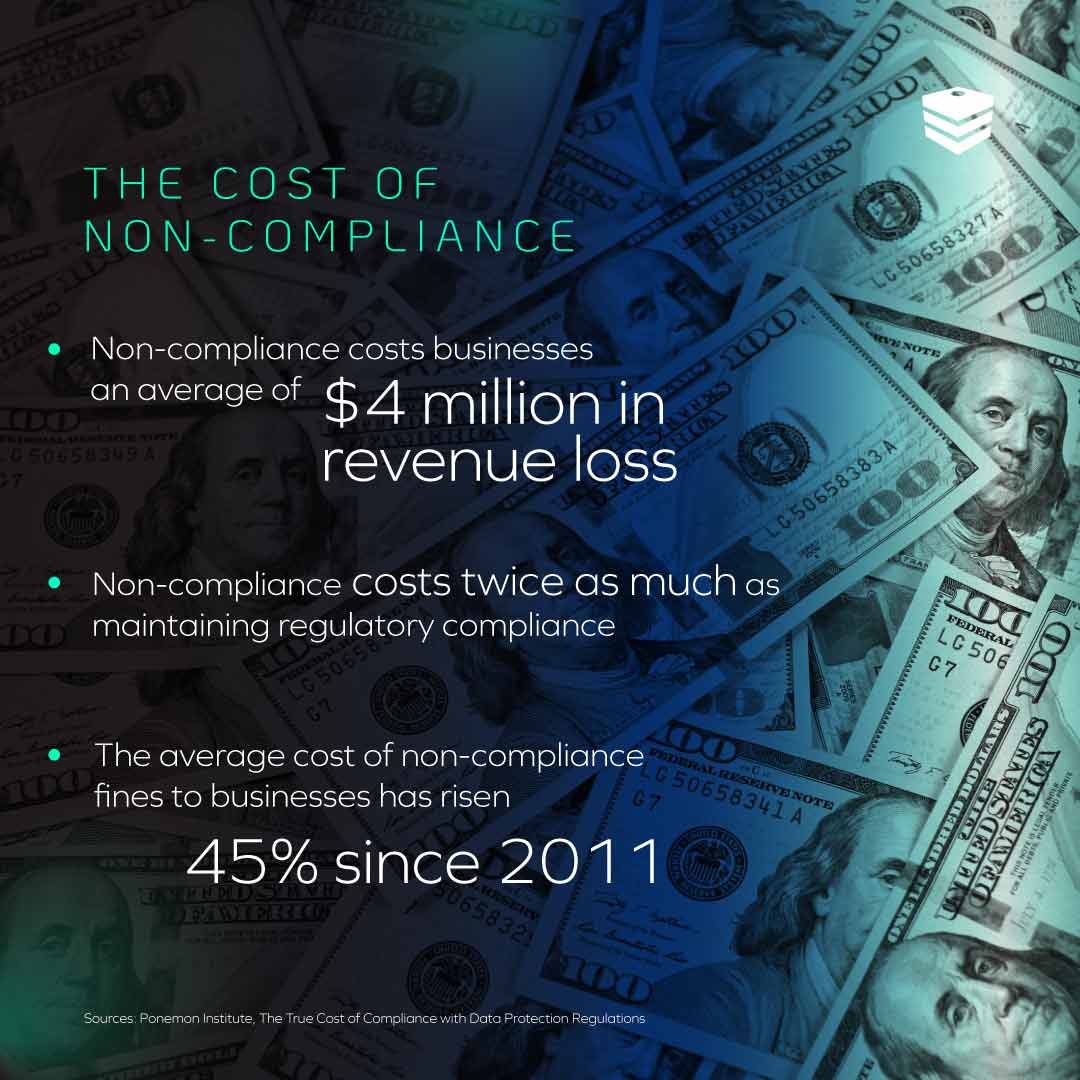
Not following compliance laws and requirements can result in fines issued by governing bodies. For example, non-compliance with the PCI DSS or Payment Card Industry Data Security Standards, which protect personal credit and debit card information, can result in monthly fines of $5,000 to $100,000.
Related Blog: What are the Consequences of a HIPAA Violation?
Uphold Your Business Reputation
If paying hefty fines does not deter you, consider that a breach of data or failure to comply to regulations will put your business in a bad light.
Earning the trust of leads and loyal customers takes a lot of time and effort. When people do business with you, they trust that their personal and confidential information is being safeguarded. Not having a thorough cybersecurity compliance program could cause the loss of your earned reputation due to a data breach.
Related Blog: Why Cybersecurity Should Be a Part of Your Brand Reputation Strategy
Protect Yourself from Cybercrime
About 52% of data breaches are from a malicious attack, which had a combined direct and indirect average cost of $4.27 million.
If a cyberattack—which are on the rise against small businesses—disrupted your business, not only could data be stolen, but potential downtime could also affect your operations and cause production loss, delays, and even business closure. Therefore, having a security protocol in place is necessary for a business to survive and thrive.
60% of small companies that suffer a cyber attack are out of business within six months.
As you can see, implementing a security compliance program can prevent costly fines, data theft, and loss of revenue.
Related Blog: What to Know About Ransomware Protection and Recovery
The Purpose of Cybersecurity
“You can have cybersecurity without compliance, but you can’t have compliance without cybersecurity.” – AJ Tamulaitis, Compliance Manager at DOT Security.
Therefore, in order to keep data confidentiality, integrity, and availability, cybersecurity needs to be part of a reliable compliance program.
At its core, cybersecurity ensures that systems, networks, programs, and data are safe from digital attacks. As the number and sophistication of cyberattacks rises, the job of maintaining cybersecurity becomes more complex.
Why Do I Need Cybersecurity?
Currently, it is not feasible for most small and growing businesses to hire an in-house compliance and cybersecurity team. It is also not a safe choice to forgo cybersecurity or compliance. As we saw above, the risks and costs of non-compliance or a cyberattack can erode or even ruin a business.
Consider consulting with a cybersecurity partner experienced in cybersecurity compliance to protect your organization. You can think of taking this proactive approach as a type of cyberinsurace: investing in security now so that the high costs do not affect you later.
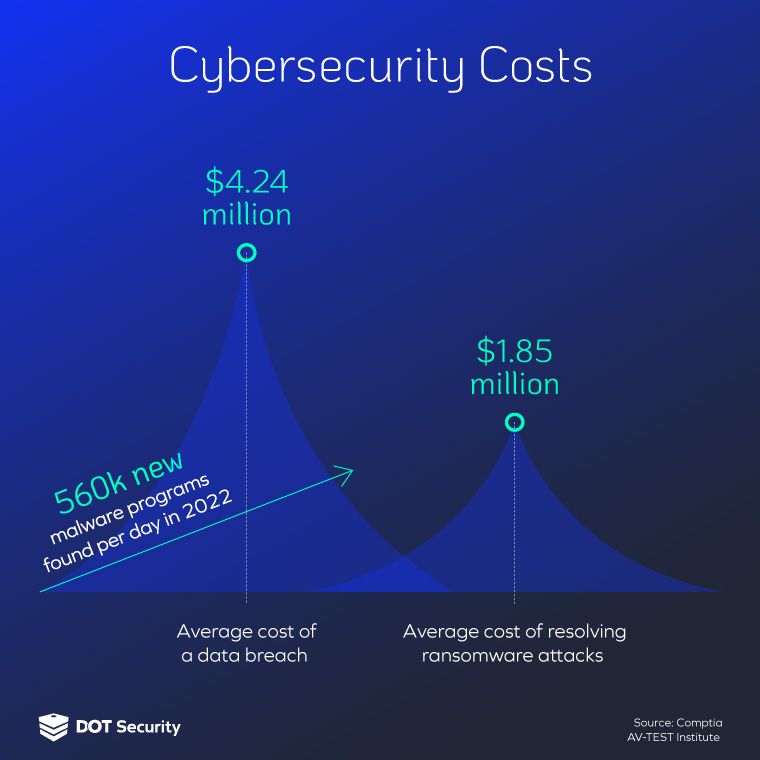
With 560K malware programs found per day in 2022 and many small businesses becoming the target of these attacks, it’s best to consider taking a proactive step to protect your assets.
Bottom Line
Cybersecurity compliance is an emerging term that describes the need to adhere to rules and regulations established to protect data.
A compliance program will vary from business to business and is dictated by location, type of data, and industry. There is no one-size-fits-all cybersecurity compliance program.
The risks and costs of a cyberattack and non-compliance can be too much for small and medium-size businesses to manage. We recommend analyzing and weighing the risks, and consulting with a cybersecurity expert or attorney in order to protect your business.
Begin your business’s cybersecurity journey by assessing any gaps in your network. Read our Cybersecurity Checklist: How Covered is Your Business? to proactively protect your assets.