
Components of DOT Security’s Services
Explore each of the core elements that combine to form DOT Security’s complete offering
See how it all comes together
DOT Security’s holistic service- A plan to get back up and running if a problem occurs
- Comply with data security laws and industry regulations
- Expert planning and training to improve overall security
- Protection for a controlled internal environment
- Coverage for individual systems and devices
- Control who can get into your networks
- Improved insight into data and communications
- Extra fortification for your most sensitive data
Risk Assessment
InsightsCybersecurity insights and analyses
Dive into the world of modern cybersecurity with explanations, predictions, and expert opinions
Find blogs, infographics, videos, and more
DOT Security insights- Definitions for industry terms and acronyms
- The complete beginner’s guide to everything cybersecurity
Cybersecurity Consulting
Secure Our World: Cybersecurity Awareness Month 2024
October 01, 2024
5 minute read

It’s officially October 1st, which brings about more than just the spooky season: it’s also Cybersecurity Awareness Month, In 2023, Secure Our World was announced as the theme for the month indefinitely. Let’s explore this theme and how businesses and individuals alike can stay secure online.
As a part of the theme, and in continuing to encourage online safety practices by individuals and businesses alike, the Cybersecurity and Infrastructure Security Agency (CISA) pushes organizations to practice simple but powerful cybersecurity measures.
Sign up for our newsletter!
Join us below to learn a little more about the history of Cybersecurity Awareness Month and the four cybersecurity measures that CISA is highlighting this year.
Don’t miss our Cybersecurity Awareness Month LinkedIn Live on November 6th featuring experts from DOT Security!
The History of Cybersecurity Awareness Month
Launched in October 2004, Cybersecurity Awareness Month sought to educate the public on best practices for safeguarding personal and financial information online. Over the years, its scope expanded beyond basic security habits to include more complex issues like data privacy, identity theft, and the evolving threat landscape.
The month-long event grew to include participation from corporations, nonprofits, and educational institutions, all of which developed their own initiatives to emphasize the importance of cybersecurity in daily life. Now an international movement, Cybersecurity Awareness Month reflects the growing need for cybersecurity resilience in a digitally connected world.
CISA’s 4 Recommendations for Online Safety
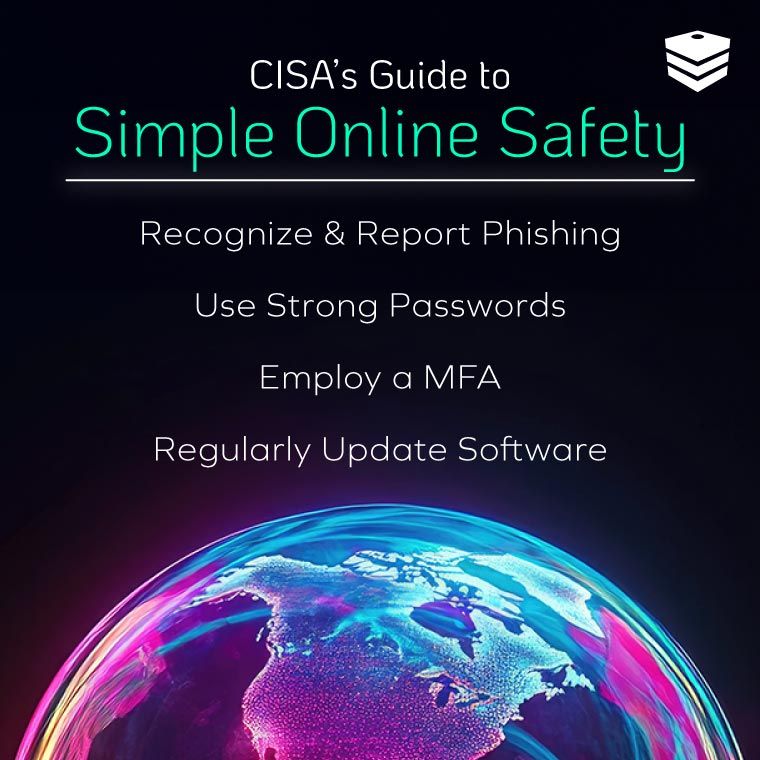
As a part of cybersecurity awareness month, CISA is reiterating the importance of relying on simple but powerful security measures that protect your network against a variety of cyber threats.
The four cybersecurity mechanisms that CISA highlights include:
- Phishing Reports
- Strong Passwords
- Multi-Factor Authentication (MFA)
- Regular Software Updates
Below we explore these security measures in more depth.
Recognize & Report Phishing
Recognizing and reporting phishing is crucial because phishing attacks are one of the most common and dangerous forms of cyber threats. These attacks typically involve fraudulent emails, texts, or websites that appear legitimate, tricking users into providing sensitive information such as passwords, credit card numbers, or personal data.
Once cybercriminals obtain this information, they can gain unauthorized access to accounts, steal identities, or carry out financial fraud. Awareness of phishing schemes helps individuals and organizations avoid falling victim to these attacks and mitigates the risk of widespread damage.
Reporting phishing is equally important because it helps cybersecurity teams identify and shut down ongoing attacks. When phishing attempts are reported to authorities or IT departments, it allows them to block malicious links, prevent future attempts, and alert others within the network or organization.
This collective effort strengthens overall cybersecurity defenses, making it harder for attackers to succeed. Early detection and reporting of phishing attacks contributes to the broader effort of reducing the impact of cybercrime on both individuals and society at large.
Use Strong Passwords
Strong passwords or passphrases are fundamental to cybersecurity because they serve as the first line of defense against unauthorized access to accounts and systems. A weak or easily guessable password can be exploited by hackers through techniques like brute force attacks or credential stuffing, where attackers use previously compromised passwords to gain entry.
Strong passwords, which typically include a mix of uppercase and lowercase letters, numbers, and special characters, or passphrases, which are longer and more complex combinations of random words, make it significantly harder for attackers to break in. By increasing the time and effort needed to crack a password, strong credentials help reduce the risk of account breaches.
- A strong password might look something like this: t1vNgNqrAIEPPjF
- A strong passphrase, on the other hand, might look like this: C0ff33ISmyF@v0rit3
In addition to protecting individual accounts, strong passwords or passphrases play a critical role in preventing broader network compromises by supplementing identity access controls. Once attackers gain access to a single account, they can often move laterally within a system, accessing more sensitive data or escalating privileges.
Using strong, unique passwords or passphrases for different accounts ensures that a breach in one system does not lead to widespread access to others. Overall, strong passwords are a simple but powerful tool in the fight against cyberattacks.
Deploy Multi-Factor Authentication (MFA)
Multi-factor authentication (MFA) is a security method that adds an extra layer of protection to the login process by requiring users to present two or more forms of verification before granting access to an account or system.
Instead of relying solely on a password, MFA requires a combination of something the user knows (like a password), something the user has (such as a smartphone or security token), or something the user is (biometrics like a fingerprint or facial recognition).
This added step ensures that even if a password is compromised, the attacker would still need the second factor to gain access, significantly reducing the likelihood of unauthorized entry.
MFA is critical in defending against a variety of cyber threats, particularly credential-based attacks. Passwords alone can be vulnerable to phishing, brute force attacks, or data breaches, but MFA makes it harder for attackers to succeed, as they would need to compromise multiple factors to infiltrate an account.
By requiring multiple forms of verification, MFA strengthens security for everything from email and banking accounts to enterprise networks, making it one of the most effective ways to protect sensitive data and systems.
Update Software Regularly
Conducting regular software updates is a proactive way to maintain strong cybersecurity because they include patches that fix newly discovered vulnerabilities. Cybercriminals actively search for and exploit these weaknesses to launch attacks, such as injecting malware or gaining unauthorized access to systems.
By keeping software up to date, users can protect themselves against known threats, as updates close security gaps before attackers can take advantage of them. Failing to install updates can leave devices and networks exposed to preventable risks.
In addition to security improvements, software updates frequently enhance the functionality and performance of programs by fixing bugs or adding new features. This not only helps ensure that systems run efficiently but also boosts their resilience to evolving cyber threats.
All-in-all, regular updates are an essential part of maintaining a strong, layered cybersecurity strategy, reducing the risk of data breaches and keeping systems safe from the latest attack techniques.
Cybersecurity in the Wild
If you’re curious about how cyberattacks play out in the wild and the cybersecurity measures that come into play, you can read or watch through our series, The DOT Report, which covers the largest headlines in the cybersecurity space each month.
- Raptor Train Botnet Compromises 200,000+ Devices
- Europol Shuts Down Phishing Campaign
- Hacktivist Group Targets Russia
- New PondRAT Malware Hidden in Python Packages
- Enzo Biochem Settles for $4.5 Million
- CISA’s Warnings About Jenkins Vulnerability
- Hackers Arrested in Italy after $14 Million Crypto Heist
- Cybercriminals Exploit Popular Software Searches
- The Global CrowdStrike Crisis
- 10 Billion Passwords Leaked in RockYou2024
- SiegedSec Targets Heritage Foundation
- 95% of Organizations Have at Least One Critical Risk
- 911 S5 Botnet Take Down
- Paris Olympic Games Targeted by Misinformation
- Security Information and Event Management (SIEM) Systems Underperforming
- RansomHub Ramps Up Operations
Wrapping Up on Cybersecurity Awareness Month
Cybersecurity Awareness Month started back in the early 2000’s when the internet itself was still fairly fresh. Since its inception, however, the initiative has grown and expanded significantly. This October marks the 21st annual Cybersecurity Awareness Month, and as always, is chalk-full of campaigns from corporations, government agencies, and nonprofits encouraging cybersecurity practices for all.
Practicing simple cybersecurity measures like reporting phishing attempts when you see them, implementing MFA, using strong passwords, and regularly updating your software applications can go a long way in keeping individuals and organizations safe from common cyberattack.
Keep the conversation around Cybersecurity Awareness Month going by joining us for a LinkedIn Live on November 6th, featuring a few of our experts from DOT Security.